



Month: June 2024
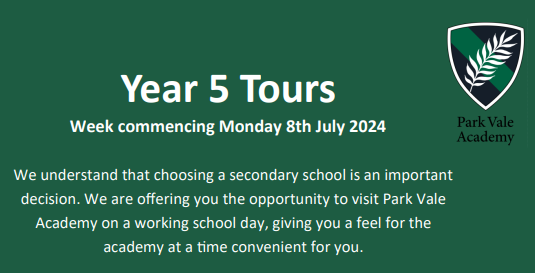
Year 5 Open Morning Thursday 11th July 2024 9.15am – 10.30am
28 Jun 2024

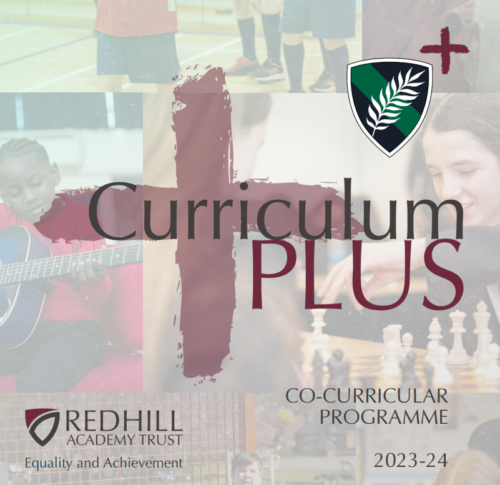
PVA Curriculum Plus- Co-Curricular Offer June & July 2024 ***UPDATED*****
10 Jun 2024
Co-curriculum refers to the activities and learning experiences that take place in school alongside the academic curriculum. Academic attainment is a key element of school life and it is complemented by a broad and enriching co-curriculum to provide a rounded education. Park Vale students should aim to participate in at least two clubs a week.
See our timetable for clubs and activities on offer in our Curriculum Plus booklet


Year 10 PSHE Workshop – 7th and 14th June 2024
7 Jun 2024
Sexually Transmitted Infections (Y10 workshop led by Nottingham University Hospital staff)
Aim – to increase young people’s knowledge about how STI’s are transmitted, the prevalence of STI’s and the impact on health and how risk can be reduced through safer sex and regular testing.
By the end of the session students will:
- Be able to name the most common STIs in the 15-24 age group
- Be able to explain how STIs, including HIV are transmitted and how we can reduce the risk (including condom use)
- Have increased understanding of how to test for and treat STIs
- Have increased understanding about self-examination and when to seek help

Y10 PARENTS’ EVENING Tuesday 16th July 2024 (4 pm – 7 pm)
6 Jun 2024
Please use the link below to book your appointments
https://parkvaleacademy.parentseveningsystem.co.uk/
Click here for a parents’ evening guide to using the system
Questions you may wish to ask at parents’ evenings
Jot down a list of questions and/or observations (not too many, though) on each subject in advance so your appointments are focused and make the most of the limited time.
Some useful questions might be:
- Is my child’s progress in line with the teacher’s expectations?
- Has he or she done anything particularly well, or badly?
- What can he or she do to improve?
- Are they attending the extra revision sessions after school?
- How can I help as a parent?
- How can you help as his or her teacher?
- How much time should my child’s homework for this subject take?
- How much time should my child be reading?
- What do his or her grades tell us about possible performance in important future exams?
- Does he or she contribute to lessons?
- How does my child get along with the other pupils in the class and the teachers?
Make a note on the night of the teachers’ answers – after a couple of hours whisking from one subject to another, it can be easy to forget or muddle the comments.
…And more questions
Most teachers have a wealth of knowledge and experience, so ask for their guidance and suggestions on how you can help your child to do their best in the subject. If a teacher says something you don’t understand, ask for clarification. Parents are not expected to know all about a subject or a method of teaching.
Constructive criticism
Good teaching means identifying areas for improvement, so don’t be offended if you hear criticism of your child. This should always be constructive and designed to help them to achieve their potential in the subject. If your child is with you, try not to sound disappointed or negative – or tell your child off! Take the advice of the teacher as a positive step towards better marks in the future. Remember that it’s rarely helpful to compare your child’s performance to other members of the class, set or year group – what’s important is that they are achieving in line with their own capabilities, not those of others.